Intervals or Steady Sessions: Two Different Rhythms
Intervals or steady sessions offer different ways to pace a workout. Compare effort, recovery, and route demands to choose a rhythm that fits your day.
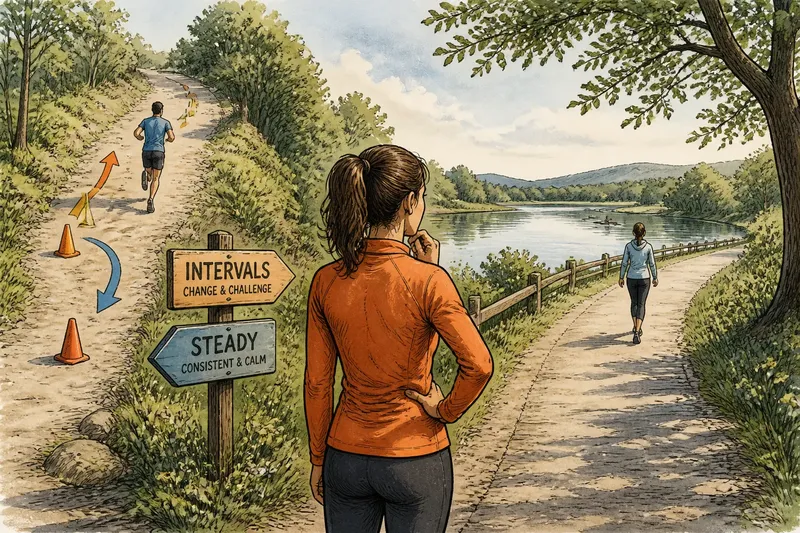
You lace your shoes beside the door, with a short stretch of pavement ahead and no appetite for a complicated plan. Intervals or steady sessions can both fill that outing, but they organize effort differently: intervals alternate purposeful surges with easier movement, while steady sessions hold a broadly even pace.
That difference affects how a workout feels and what you decide before starting. Use these five points to match either format to your time, terrain, and energy.
1. Intervals divide a session into clear effort blocks
An interval session alternates work periods with easier recovery periods. A work period might mean a brisk run, a stronger cycling effort, or an energetic stretch on a rowing machine. Recovery might be a walk, a gentle pedal, or simply easing the pace. The changing effort is the defining feature; the activity can vary.
Intervals are not all-out sprints by default. Work periods can feel more demanding than recovery while remaining controlled and repeatable. The contrast matters more than making every effort dramatic.
Choose what each effort should feel like and what cue signals the switch. A clock, a familiar landmark, or the end of a song can work. Keep the plan simple enough to remember while moving.
Make the easier portion feel like a genuine change from the work period.
2. Continuous sessions hold one broad rhythm
A continuous session keeps you moving without planned work-and-recovery blocks. Your pace may shift on a hill or around a crowded path, but the overall effort stays fairly even. A comfortable jog, steady swim, or relaxed ride without deliberate surges all fit.
Steady does not mean identical from start to finish. Choose a pace that lets you settle in and adjust naturally. If breathing becomes strained or your form feels ragged, ease off to preserve the session’s intended rhythm.
This format involves fewer scheduled decisions. Choose a manageable effort and keep it broadly consistent, leaving attention for the route, your surroundings, or the movement itself.
Settle into a pace you can sustain without turning the outing into a contest.
3. The formats require different pacing decisions
Intervals ask you to manage repeated changes. Start each work period with enough restraint to complete it, then use recovery to bring the effort down. If the first effort is too ambitious, later rounds may become uneven or turn into a struggle.
A continuous session asks a different question: can you keep the effort comfortably similar as the session unfolds? You may ease off into a headwind or choose a gentler pace on a slope. There is no need to force a faster finish just because the session is continuous.
Imagine you have time for one loop around a neighborhood park and feel low on energy. You choose an easy walk-jog and let the loop set the endpoint; the expected result is a relaxed outing with enough control to finish comfortably. On a more energetic day, you plan brisk stretches between familiar path features, walking easily between them; if the final brisk stretch feels controlled, you keep that approach, but if it becomes a strain, you shorten the next effort or return to an easy pace.
Choose the pacing question you are better prepared to answer that day: “Can I repeat this?” or “Can I hold this?”
4. Build the session around conditions, not a rigid script
For intervals, choose a cue that suits the activity and location. Time cues can work on a treadmill, stationary bike, or quiet path. Landmarks may be simpler outdoors, where crossings, other path users, and uneven ground can interrupt a timed effort. Keep recovery flexible enough to account for interruptions.
For a continuous session, a familiar route can help you keep the effort even without checking a watch. A flat path may suit someone who wants few changes in demand. On a hilly route, soften the pace on climbs; the overall effort can remain broadly steady even when speed changes.
Say you plan intervals on a busy shared trail. You choose an unobstructed stretch for brisk efforts and let recovery continue until the path is open. If the trail stays crowded, you switch to an easy continuous pace or choose a quieter route; either decision avoids rushing around other people.
Let the setting shape the cue instead of making the route obey a plan it cannot support.
5. Choose the rhythm that fits the purpose of the day
Intervals can suit a day when you want variety and feel comfortable switching effort repeatedly. They can also add structure to a short outing, as long as the work periods remain manageable. Continuous movement can suit a calmer day or one when you would rather not monitor repeated changes.
Neither format is automatically better. You might enjoy one more, find one easier to fit into a route, or choose differently according to how rested you feel. If you are new to exercise or managing a health concern, a qualified professional can help you choose an appropriate level of effort.
Afterward, note which format you used, how the effort felt, and whether you finished with control. That record can help you notice which rhythm fits your schedule and preferences without treating one outing as a verdict.
For intervals or steady sessions, choose the structure whose effort you can manage and whose rhythm suits the day you have.
Questions about intervals or steady sessions?
Can a beginner use interval training?
Intervals can use gentle changes, such as alternating an easy walk with a slightly brisker walk. Keep the brisk effort controlled and make recovery easy enough to speak comfortably.
Do steady sessions have to stay at exactly the same pace?
No. Small changes caused by hills, weather, or the route are normal. The goal is to keep the overall effort broadly even, not to maintain an identical pace at every moment.
Can I combine intervals and continuous movement?
Yes. You can begin with easy continuous movement, include planned brisk efforts, then return to an easy pace. This gives the session a clear structure without asking every part to follow one rhythm.
Which format should I choose today?
Consider your energy, surroundings, and appetite for pacing decisions. Choose intervals if controlled changes appeal; choose a steady session if a consistent effort feels simpler.
Use a quick check to choose your session
Before heading out, check the conditions that could shape your effort. Each result points to a clear choice, with another option if the plan does not fit.
- Check your energy: if you feel alert and ready for effort changes, choose controlled intervals; if you feel drained, switch to an easy continuous session or rest.
- Check the route for clear, open stretches: if you have them, use landmarks for brisk efforts; if the path is crowded, choose an easy continuous pace or move to a quieter route.
- Check the terrain: if the route is mostly even, use it for a broadly steady session; if it is hilly or uneven, ease your pace on climbs or choose a flatter route.
- Check whether you want repeated pacing decisions: if effort changes sound manageable, plan simple intervals; if you would rather focus on one rhythm, choose continuous movement.
- Check whether you can recover comfortably between brisk efforts: if easy movement brings the effort down, continue with controlled intervals; if it does not, lengthen recovery or return to a steady pace.
- Check how the opening effort feels: if you can complete it with control, repeat that level; if you strain or lose form, shorten the next effort or ease off.
Intervals or steady sessions work best as flexible choices, not rigid labels. Let your energy, route, and comfort decide which rhythm makes sense today.